
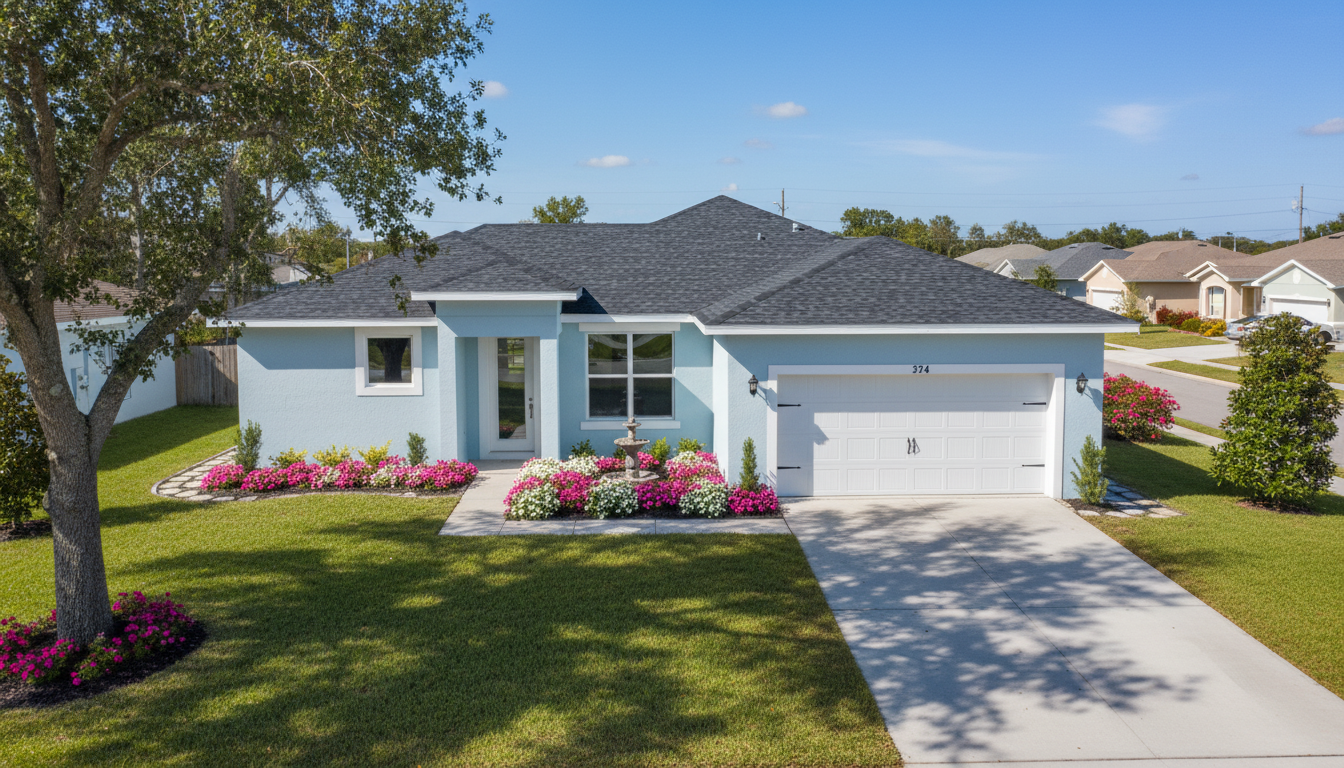
Your home’s exterior color is a powerful statement. It defines its curb appeal, reflects your style, and can even influence its perceived value. But here in South Florida, the intense, year-round sun poses a unique challenge. That beautiful charcoal gray or vibrant navy you love can quickly turn into a faded, chalky version of itself if not chosen with our climate in mind.
The good news is that you are not confined to a world of beiges and off-whites. Modern paint science and a few strategic principles allow you to choose a beautiful, durable color that will look vibrant for years to come. Understanding why paint fades and how to select the right products is key to protecting your investment.
The science of fading: what the Florida sun does to your paint
Fading occurs when ultraviolet (UV) radiation from the sun breaks down the chemical bonds in paint pigments and the resin (binder) that holds them all together. This process, called photodegradation, is accelerated in Florida due to:
- High UV index: We experience strong, direct sunlight for much of the year.
- Heat: High temperatures speed up the chemical reactions that lead to paint failure.
- Humidity and salt: Moisture in the air and salt spray can penetrate and degrade the paint film, making it more vulnerable to UV rays.
The result? Chalking (a powdery residue on the surface), color shift, and a loss of gloss, leaving your home looking tired and worn.
The color durability spectrum: which hues last longest?
Not all colors are created equal when it comes to UV resistance. The durability of a paint color is directly linked to the size and type of its pigment particles.
Most fade-resistant: light and mid-tone colors
- Whites, beiges, and creams: These colors use inorganic pigments like titanium dioxide, which are inherently very stable and resistant to UV radiation. They reflect more light and heat, reducing stress on the paint film.
- Light grays, taupes, and greiges: These versatile, popular neutrals also rely on robust pigments that hold up exceptionally well, offering a modern look without the fading risk.
- Pastels: Soft yellows, blues, and greens can be formulated to be quite durable, as they are lightened with plenty of titanium white.
Moderate fade-resistance: deep tones and earth colors
- Deep browns, terracottas, and olive greens: Many of these get their color from iron oxide pigments. These pigments are very durable but can sometimes shift in hue over a long period, typically towards a lighter, softer version.
- Certain navy blues and forest greens: Modern formulations have improved, but these darker, saturated colors require a high-quality paint base and are more susceptible to noticeable fading than lighter shades.
Least fade-resistant: bright, dark, and certain synthetic colors
- Intense reds, oranges, and yellows: Many of the vibrant pigments used to create these colors are organic and are much more vulnerable to UV damage. They can fade significantly faster.
- Very dark colors (charcoal, black): These colors absorb massive amounts of heat and UV radiation, putting the paint film under extreme stress and accelerating the breakdown process.
It’s not just color: the critical role of paint quality and application
Choosing a durable color is only half the battle. The quality of the paint and the skill of the application are equally important.
- Invest in 100% acrylic paint: For South Florida, this is non-negotiable. 100% acrylic latex paints are flexible, allowing them to expand and contract with the heat. They are also highly resistant to mildew, fading, and cracking. Run from vinyl-acrylic blends.
- Look for “high durability” or “UV resistant” labels: Premium paint lines from Sherwin-Williams and Benjamin Moore are specifically engineered with advanced resins and additives to provide a superior shield against the elements.
- Professional preparation and application: A painter must properly prepare the surface, apply a high-quality, tinted primer, and apply the correct number of coats with even coverage. A single thin coat of even the best paint will fail prematurely.
Crafting Your fade-resistant color palette: a practical guide
You can have a beautiful, unique home without sacrificing longevity. Here’s how:
- Use a bold color as an accent: Love a vibrant red or a deep navy? Use it on your front door, shutters, or on a single accent wall. Smaller, replaceable areas are much easier and cheaper to repaint if fading occurs.
- Embrace the LRV (Light Reflective Value): This scale measures how much light a color reflects. For Florida homes, choose body colors with an LRV of 50 or higher. This ensures they reflect a significant amount of light and heat.
- Consult a professional: At ASC Painting, we don’t just apply color; we advise on it. We understand which specific colors from our premium product lines have proven track records in our local climate. We can show you real-world examples of how colors age over time.
Protect your color investment with ASC Painting
Your home’s exterior should be beautiful and durable. The team at ASC Painting is an expert in both the art and science of exterior painting in South Florida. We use only the highest quality, 100% acrylic paints and follow a meticulous preparation process to ensure your chosen color remains vibrant and protective for as long as possible.
Ready to choose a stunning, fade-resistant color for your home? Contact ASC Painting today for a free color consultation and estimate. We’ll help you navigate the options and select a palette you’ll love for years to come.
Call us now at (561) 757-9705 send us a text to get started.
ASC Painting: Proudly serving Delray Beach, Boca Raton, Fort Lauderdale, and all South Florida communities.