Drywall damage is a common issue in many homes. Holes from wall anchors, cracks from settling, water damage, or remodeling work often leave visible repairs behind. While fixing the drywall itself is important, one step determines whether the repair blends in or stands out: texture matching.
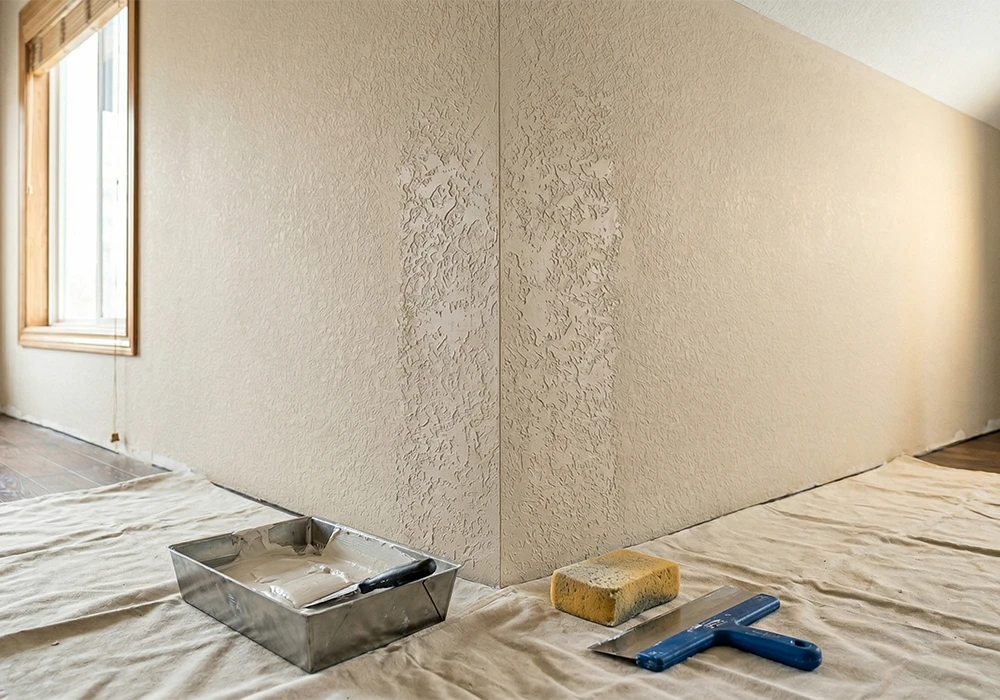
Many walls are not perfectly smooth. Builders frequently apply textures such as knockdown, orange peel, or other finishes to hide minor imperfections and create visual consistency. When drywall repairs are made without properly matching the original texture, the repaired area becomes immediately noticeable.
Professional drywall texture matching ensures repairs blend in with the surrounding wall, restoring a smooth and uniform appearance.
Why Wall Texture Matters in Drywall Repairs
Most homeowners focus on the hole or crack that needs fixing. However, once the damaged drywall is patched, the next challenge is recreating the surface finish.
Textured walls are designed to scatter light in a specific way. If a repair is left smooth while the rest of the wall is textured, light will reflect differently across the surface. These contrast repairs stand out, even if the paint color is perfectly matched.
Texture matching restores the same visual pattern across the wall, ensuring the repaired area blends naturally with the rest of the room.
Common Types of Drywall Texture
Different homes use different drywall textures depending on style, builder preference, and region. Matching these textures correctly requires experience and the right techniques.
Some of the most common drywall textures include:
Orange peel texture
This subtle texture resembles the slightly bumpy surface of an orange peel. It is one of the most common wall textures in modern homes and requires careful spray application to replicate the look.
Knockdown texture
Knockdown texture is created by spraying a heavier texture pattern and then lightly flattening it with a drywall knife. It produces a soft, mottled appearance often used on ceilings and large wall areas.
Smooth finish with skim coating
Some homes use nearly smooth drywall finishes, but even these require careful skim coating to ensure repairs remain invisible.
Each of these textures requires different tools, materials, and application methods.
Why Texture Matching Is Difficult for DIY Repairs
Many homeowners attempt drywall repairs themselves, only to find that the patch becomes more noticeable after painting. This usually happens because the texture was not properly recreated.
Common DIY mistakes include:
- Applying too much or too little joint compound
- Using incorrect spray techniques
- Creating inconsistent texture patterns
- Failing to blend the edges of the repair area
- Skipping sanding and finishing steps
Texture work requires both technique and timing. Joint compound must be applied at the right consistency and manipulated while it is still workable. Once it dries incorrectly, the entire surface may need to be sanded and redone.
The Professional Texture Matching Process
Professional drywall technicians follow a detailed process to ensure repairs blend seamlessly with the surrounding wall.
The process typically includes:
1. Preparing the damaged area
The damaged drywall is repaired or replaced first. Joint compound is applied, sanded smooth, and properly leveled with the surrounding wall surface.
2. Analyzing the existing texture
Before applying a new texture, professionals carefully examine the wall to determine the exact pattern and density of the existing finish.
3. Recreating the texture pattern
Using specialized tools or spray equipment, the technician applies texture to the repaired area. The goal is to mimic the original pattern as closely as possible.
4. Blending the edges
Instead of limiting the texture to the patch area, professionals feather the texture outward to blend it into the surrounding wall.
5. Final preparation for paint
Once the texture has dried, the surface is lightly sanded, if necessary, and prepared for priming and painting.
When done properly, the repaired area becomes nearly impossible to detect.
Why Painting Alone Won’t Hide Poor Repairs
Some homeowners believe that a fresh coat of paint will hide drywall patches. Unfortunately, paint often does the opposite.
Paint highlights surface differences by reflecting light across the wall. If the texture pattern is inconsistent, the repaired area will stand out even more after painting.
This is why drywall preparation and texture matching are essential before applying new paint.
Professional painters and drywall specialists work together to ensure the surface is properly repaired and finished before the painting process begins.
Texture Matching After Water Damage or Remodeling
Texture matching is especially important after larger repairs, such as water damage restoration or remodeling projects.
When sections of drywall are replaced, the new panels have a completely smooth surface. Without proper texturing, the repaired section will appear as a large, obvious patch.
Matching the existing texture ensures the repaired area blends seamlessly with the wall or ceiling, maintaining the space’s appearance.
Protecting Your Home’s Interior Appearance
Walls and ceilings play a major role in how the home looks and feels. Visible drywall patches can make even a freshly painted room feel unfinished.
Professional texture matching restores the original appearance of walls and protects the quality of the paint finish. The result is a clean, consistent surface that looks natural and professionally maintained.
Whether the damage comes from small holes, cracks, water leaks, or renovation work, proper drywall repair and texture matching ensure that the repair is virtually unnoticeable.
Instead of drawing attention to past damage, the wall looks exactly the way it should: smooth, uniform, and flawless.