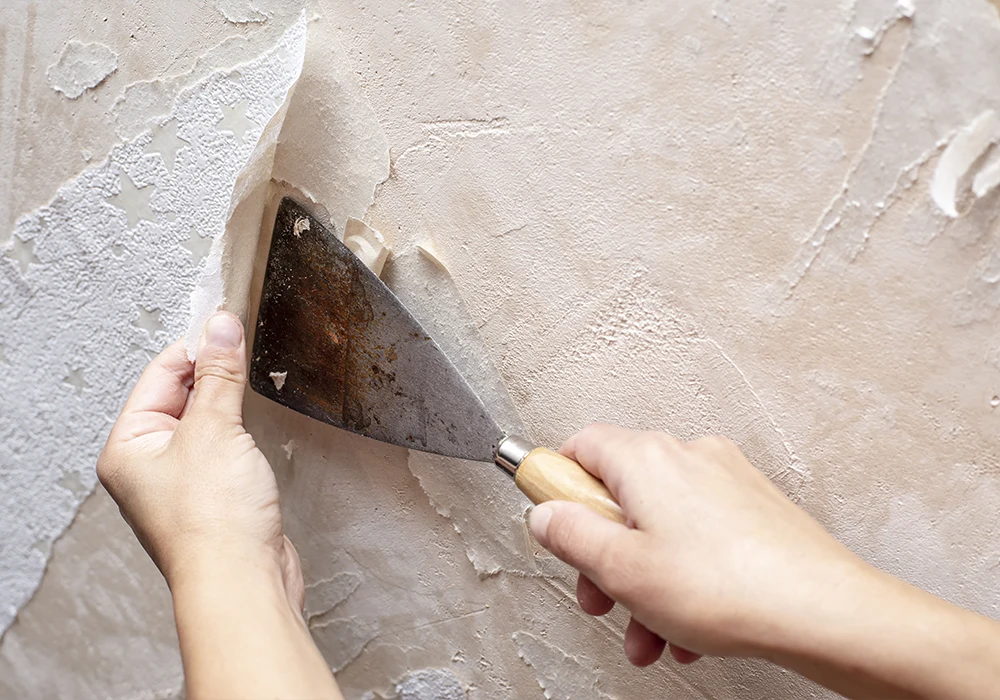
Wallpaper can look great for years, but when it starts peeling, fading, or feeling outdated, many homeowners think about painting over it or removing it themselves. The problem is that improper wallpaper removal often causes wall damage that later shows through fresh paint. Professional removal helps protect the surface, reduce repair costs, and create a smoother final result.
Hidden damage that DIY removal often causes
Wallpaper is usually installed with a strong adhesive designed to last. Pulling it off without the right tools or technique can remove drywall paper, leave glue residue, or create uneven surfaces. These issues may not seem serious at first, but once paint is applied, flaws become much more visible.
Common problems include torn drywall paper, adhesive buildup that prevents paint from bonding correctly, and small gouges that require patching. Fixing these after the fact usually costs more than doing proper removal from the start. Professional painters minimize these risks by using controlled moisture methods, safe scraping tools, and surface treatments.
Another factor is time. Removing wallpaper carefully can take hours, especially in kitchens, bathrooms, or older homes with multiple layers. Professionals handle this efficiently without damaging the wall structure.
Why proper removal improves paint durability
Paint needs a clean, stable surface to adhere correctly. Leftover glue or damaged drywall creates weak spots where paint may bubble, peel, or wear unevenly. Proper wallpaper removal prepares the wall so the new coat of paint lasts longer and looks consistent.
Here are some practical benefits homeowners usually notice:
- Fewer repairs before painting, which lowers the overall project cost
- Smoother wall finish that reflects light evenly
- Better paint adhesion, reducing peeling or bubbling later
- Faster painting process once the surface is prepared
Professional removal often includes skim coating or light sanding, if necessary. This extra step evens out the wall, resulting in uniform paint coverage instead of a patchy appearance.
In humid climates like South Florida, proper preparation matters even more. Moisture can interact with leftover adhesive, causing early paint failure. Removing wallpaper correctly helps avoid those long-term maintenance issues.
A smarter approach before repainting
If you are planning to repaint rooms with wallpaper, removal should always come first. Painting over wallpaper might seem faster, but seams, textures, and adhesive breakdown usually show through within months.
Hiring a professional to remove your wallpaper protects your walls, ensures a predictable preparation process, and helps your new paint last longer. It is a practical investment that prevents future repairs and maintains your home’s appearance and value.
If you want walls that look clean, smooth, and durable after repainting, starting with proper wallpaper removal makes a real difference.