
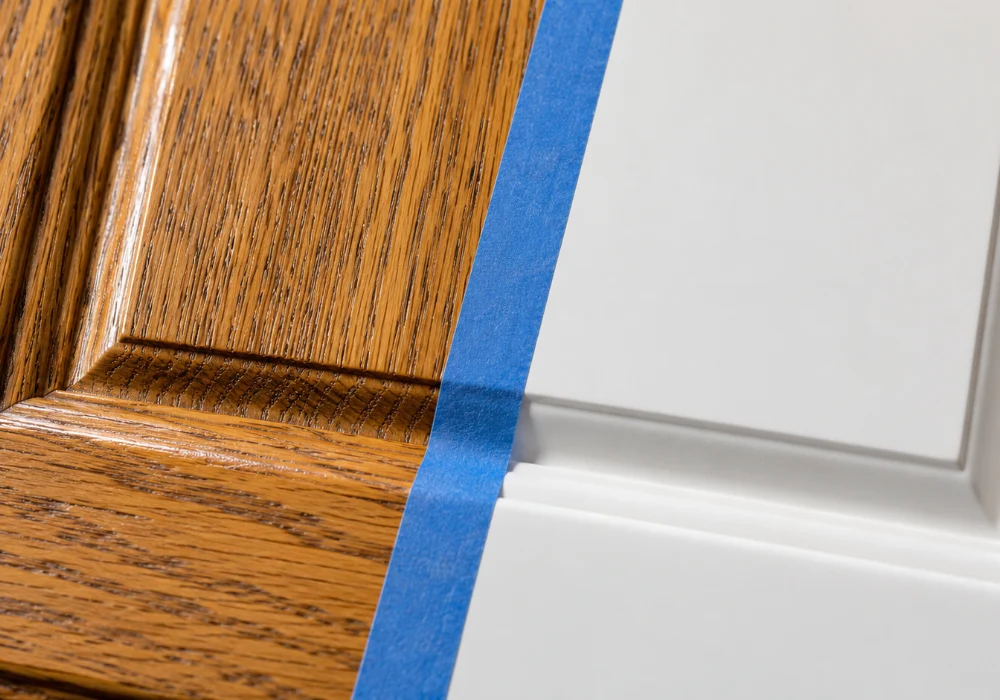
In South Florida, thousands of homes built throughout the 1990s and early 2000s feature solid honey oak cabinetry. While these cabinets are structurally sound and built from durable hardwood, the warm orange tone dates the kitchen. Homeowners looking to modernize often choose painting as a cost-effective alternative to complete replacement, but oak presents a specific technical challenge: deep, open grain pores.
Applying standard interior paint directly to oak results in a textured, uneven surface where every wood pore telegraphs through the finish. Instead of a smooth, modern kitchen, the result looks like painted lumber. Achieving a flat, durable surface requires a methodical grain-filling and spray application process designed specifically for open-pore hardwoods.
Why Honey Oak Grain Shows Through Standard Paint
Oak is a ring-porous hardwood. During the tree’s rapid spring growth, it develops large, tubular vascular cells that create deep valleys across the surface of the milled lumber. In contrast, closed-grain woods like maple or poplar have tight, uniform cell structures that take paint smoothly with standard prep work.
When you coat oak with conventional wall paint or a standard primer, the liquid coating shrinks as its water or solvent content evaporates during the drying process. As the film contracts, it pulls down into those open valleys. The high ridges remain covered, but the deep pores create visible indentations across the entire cabinet face.
High humidity in coastal environments like Delray Beach and Boca Raton amplifies wood movement. When moisture levels shift, oak expands and contracts, causing brittle topcoats to crack along those unfilled pores. Eliminating the grain pattern requires physically packing those voids with a dedicated filler before any finish coat touches the wood.
Degreasing and Breaking Down the Factory Lacquer
Kitchen cabinets accumulate years of aerosolized cooking oils, skin oils around handles, and cleaning residue. Applying paint or filler over contaminated wood causes adhesion failure, bubbling, and peeling within months.
The preparation starts by removing all cabinet doors, drawer fronts, and hardware. Every square inch of wood requires a heavy wash with an industrial degreasing agent like trisodium phosphate (TSP) or a solvent-based wax and grease remover. Special attention must be paid to the areas surrounding the stove and the lower edges of doors where hand contact is highest.
Once degreased and completely dry, the original clear factory lacquer must be scuff-sanded using 150-grit sandpaper. This step does not require stripping the cabinet down to bare raw wood. The goal is removing surface gloss to give subsequent bonding primers and grain fillers a mechanical profile to grip.
The Critical Step: Grain Filling and Pore Leveling
Sanding alone will never remove oak grain because sanding cuts the high spots while leaving the deep valleys untouched. The only way to eliminate the texture is by filling the low pores to match the plane of the wood surface.
A professional finish relies on an acrylic or water-based grain filler engineered specifically for cabinet work. The filler is worked across the grain using a firm plastic spreader or putty knife, forcing the compound deep into the pores. It must be applied diagonally to the grain direction to prevent the blade from scooping the material back out of the grooves.
After the first pass cures completely, the surface is machine-sanded flat with 220-grit abrasives mounted to an orbital sander with dedicated dust extraction. A single coat rarely fills the deepest oak pores entirely, as fillers shrink slightly upon drying. Inspecting the surface under angled halogen lighting reveals any remaining low spots, which receive a targeted second application followed by another fine-grit sand down to an even plane.
Homeowners weighing professional cabinet painting versus DIY approaches often find grain filling to be the most labor-intensive bottleneck of the entire project. Skipping or rushing this step guarantees that the grain will remain visible under the final coat.
Blocking Tannin Bleed With the Right Primer
Oak is packed with natural tannins, which are acidic chemical compounds that migrate upward through paint coatings. When water-based primers are applied directly to raw or sanded oak, the moisture reactivates these tannins, causing them to bleed through to the surface as unsightly yellow or pinkish-brown stains.
Water-based latex primers cannot stop oak tannin migration. The proper foundation requires an oil-based primer or a pigmented shellac-based bonding primer. These solvent-based formulations seal the cellular structure of the oak, locking the natural resins inside the wood fiber.
Applying a high-build primer also provides a micro-leveling layer over the grain filler. Once the primer cures, the surfaces are thoroughly hand-sanded with 320-grit paper to remove any minor brush marks or surface nibs. This creates an ultra-smooth, uniform foundation ready to accept the finish enamel.
Understanding the difference between basic surface painting and specialized cabinet coatings is essential, especially when evaluating painting versus replacing your kitchen cabinets for long-term return on investment.
Why Spray Application Beats Brushing and Rolling
Even after executing flawless grain-filling and priming, applying paint with a brush or standard roller will introduce stipple, lap lines, and brush marks that ruin the smooth aesthetic. Brushes drag across the surface, leaving parallel ridges, while rollers leave a distinct orange-peel texture.
A true high-end finish demands airless or HVLP (High-Volume, Low-Pressure) spray equipment. Spray application atomizes the coating into an ultra-fine mist, laying down an even, continuous wet film that levels out into a seamless surface.
Professional refinishers utilize industrial wood coatings such as 2K waterborne polyurethanes or catalyzed conversion varnishes rather than standard off-the-shelf wall paint. These products cure into a hard, chemical-resistant shell that withstands grease, repeated wipe-downs, and household cleaners without softening or marring.
Reviewing the specifications of a true factory finish cabinet painting project illustrates why controlled spray environments yield finishes that last over a decade without chipping.
Cabinet Refinishing in Delray Beach, FL by ASC Painting
For homeowners across Palm Beach and Broward counties, upgrading kitchen cabinetry requires contractor accountability, precise technical execution, and materials designed to withstand Florida humidity.
ASC Painting brings more than 8 years of dedicated experience and over 500 completed projects to residential properties throughout Delray Beach, Boca Raton, Boynton Beach, and surrounding communities. As specialists in cabinet painting in South Florida, our team manages the entire process under strict quality standards:
We completely mask your kitchen interior with protective plastic containment zones to prevent dust intrusion into living spaces. Cabinet door panels and drawer faces are carefully labeled, removed, and prepped offsite or within controlled staging zones. Every piece undergoes thorough degreasing, multi-stage grain filling, tannin-blocking primer application, and precision spray coating with premium industrial enamels.
When you invest in sprayed cabinet painting in Delray Beach, you protect your home’s equity and secure a factory-grade kitchen finish at a fraction of the cost and disruption of a structural tear-out.
Get a Flawless Finish for Your Oak Cabinets
Transforming heavily grained honey oak into smooth, durable, modern cabinetry requires the right chemistry, specialized grain-filling techniques, and professional spray equipment.
If you are ready to eliminate the heavy grain on your kitchen cabinets and update your home with long-lasting craftsmanship, contact Alexandre and the team at ASC Painting.
Call or text us today at (561) 757-9705 to schedule your on-site consultation and get an exact, detailed proposal for your kitchen cabinet refinishing project.