
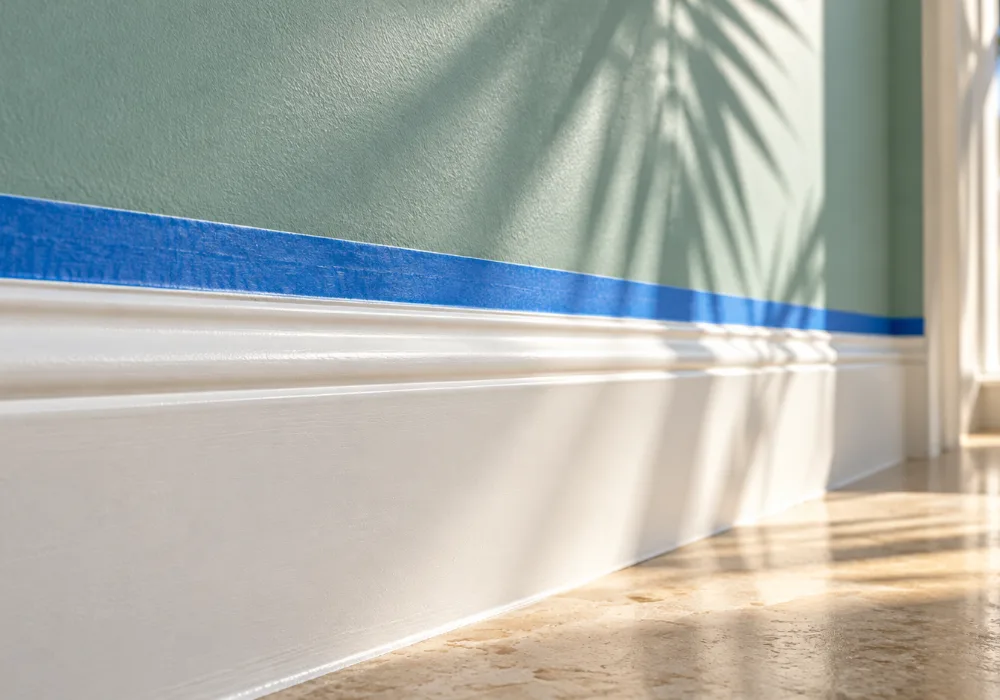
The Direct Answer: Should You Paint Baseboards or Walls First?
In standard interior painting projects, you should paint the ceilings first, baseboards and trim second, and walls third. Painting baseboards and trim before walls allows you to work faster without worrying about precise tape placement or paint overspray on the walls. Any trim paint that overlaps onto the raw drywall or primer gets completely covered when you roll the walls later.
This order eliminates unnecessary masking, speeds up project timelines, and yields sharp, straight paint boundaries along baseboards, door casings, and crown molding.
Why Professional Painters Paint Baseboards and Trim First
Professional painters follow the top-down and detail-first methodology for structural efficiency. Trim work requires durable gloss or semi-gloss enamels that resist moisture, dirt, and foot traffic, whereas walls typically feature flat, eggshell, or satin finishes. Understanding the difference between matte, satin, and glossy paint finishes is essential before choosing materials for each surface.
Painting baseboards first provides specific advantages:
- Faster trim application: You do not need to meticulously mask the wall drywall. Painters brush or spray baseboards quickly, letting excess paint overlap onto the bottom edge of the wall.
- Easier masking: Once the baseboards dry completely, applying painter’s tape along the top edge of a smooth, flat baseboard is much easier than taping textured drywall.
- Cleaner wall rolling: Rolling walls down to a pre-taped baseboard allows smooth, continuous roller strokes without fear of transferring wall paint onto trim.
Attempting the reverse order creates extra work. When you paint walls first, you must spend hours masking off the wall surface or hand-brushing baseboards with surgical precision near floor level, increasing labor time and raising the risk of drips on newly finished walls. Quality installation and coating of baseboards and crown molding establish the visual baseline for your entire interior space.
When Does Painting Walls First Make Sense?
While trim-first is the industry standard for lived-in homes, specific project conditions justify painting walls first:
- Uninstalled trim during renovations: In major remodels where old baseboards are removed, painters spray the drywall walls first. The baseboards are primed and painted off-site in a shop, installed afterwards, and touched up only at the nail holes.
- Updating wall color only: If existing baseboards are in prime condition and do not require repainting, you skip trim painting entirely and mask off the existing trim to protect it while painting walls.
- Decorative specialty wall finishes: Delicate wall textures, murals, or wallpaper installations require the walls to be finished first so heavy painter’s tape is not applied over sensitive wall materials.
For standard residential interior repaints in South Florida, changing the sequence without a structural reason often leads to common painting shortcuts that lead to higher repair costs later.
Essential Prep Steps for Clean Lines Between Walls and Baseboards
Achieving razor-sharp lines between trim and drywall requires rigorous preparation before opening a paint can.
First, remove all dust, pet hair, and drywall debris from the top ledge of the baseboards. In South Florida, indoor humidity causes airborne dust to adhere tightly to trim surfaces. Applying paint or tape over dusty wood prevents proper adhesion and causes paint to bleed underneath the tape.
Second, seal gaps with paintable acrylic caulk where the top of the baseboard meets the wall. Smooth the bead with a damp sponge or damp finger to form an airtight transition. Caulk fills uneven gaps caused by non-plumb drywall and creates a smooth surface for painter’s tape.
Third, choose the appropriate tape adhesion level. Use delicate-surface painter’s tape on newly cured enamel baseboards to prevent peeling the fresh finish during tape removal. Press the edge of the tape firmly with a putty knife or plastic scraper to seal the bond before rolling wall paint.
The Real Cost of Sequence Errors in Interior Painting
Painting out of sequence directly affects your material budget and labor investment.
When unseasoned painters paint walls before baseboards, they spend up to 40% more time on precision detail work. Freehand painting trim next to a finished wall requires slow, tedious brushwork. A single hand slip deposits heavy trim enamel onto flat or satin wall paint, requiring sanding, priming, and wall spot-painting to correct.
Removing painter’s tape from uncured trim paint can also tear away whole strips of fresh finish. This leaves jagged edges and exposed wood that demand scraping, spackling, and full re-coating. Choosing cohesive color combinations from ideal color palettes for each room in your home produces the best outcome when supported by proper execution order.
Professional Interior Painting Services in Delray Beach, FL by ASC Painting
ASC Painting delivers precise interior painting, trim finishing, drywall repair, and baseboard installation throughout Delray Beach, Boca Raton, Boynton Beach, Parkland, Coral Springs, and surrounding South Florida communities. With over 8 years of experience and more than 500 completed residential and commercial projects, the team uses structured workflows that eliminate mess, prevent finish failure, and protect property value.
The company uses commercial spray systems, low-VOC interior enamels, and commercial masking protocols so that every baseboard, crown molding piece, and wall surface transitions cleanly without paint bleed or lap marks.
Protect Your Interior Investment Today
Following proper paint sequence and surface prep protects your walls, trim, and overall project investment. Avoid messy paint lines, pulled trim finishes, and wasted labor hours by relying on experienced professionals.
For a detailed project assessment and quote on your interior painting or trim project in South Florida, contact ASC Painting at (561) 757-9705 today.