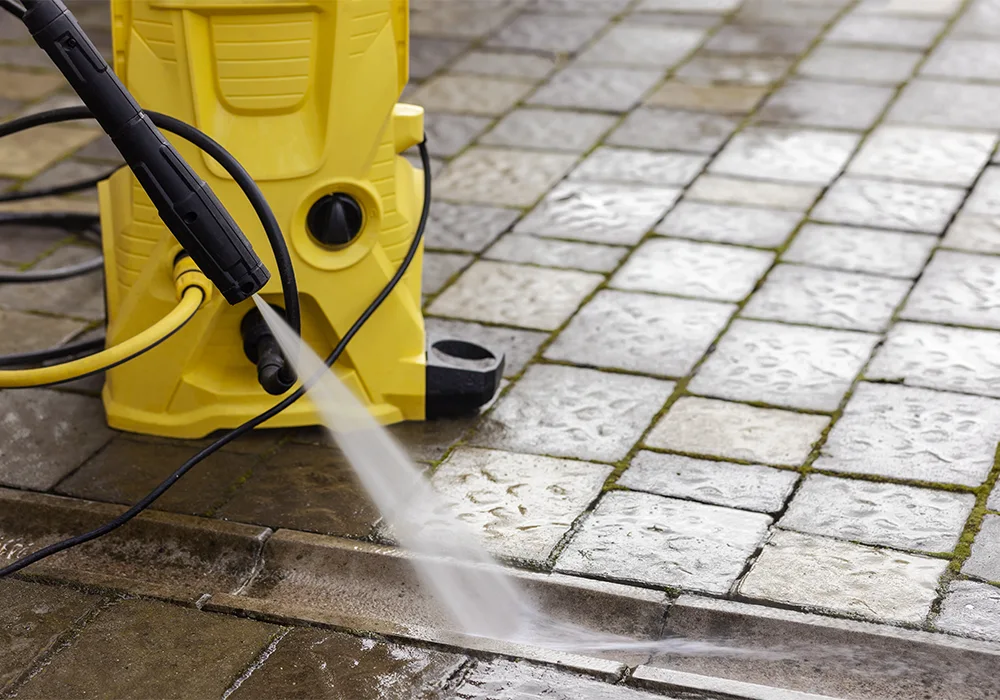
At first glance, pressure washing appears to be a simple task. Rent a machine, spray the surface, and watch the dirt disappear. It feels fast, satisfying, and cost-effective. Many homeowners and even business owners assume it’s an easy weekend project.
But pressure washing is one of the most underestimated exterior services. Done incorrectly, it can cause serious and expensive damage. A decision to save money on a small purchase can quickly result in repairs that end up costing more than if you’d hired a professional.
Here’s why DIY pressure washing often ends up costing more.
1. Too Much Pressure Can Damage Surfaces
Not all surfaces can handle high pressure. Concrete, brick, stucco, siding, wood, and roofing materials each require a specific PSI (pounds per square inch) and proper technique.
Using too much pressure can:
- Etch permanent lines into concrete
- Chip paint off the siding
- Crack stucco
- Splinter wood decks
- Loosen roof shingles
- Break window seals
Many rental machines are powerful commercial-grade units. Without training, it’s easy to use more force than necessary. Once concrete is etched or siding is damaged, there is no simple fix, and it often requires resurfacing or repainting.
2. Water Intrusion Can Lead to Hidden Damage
Pressure washing isn’t just about pressure; it’s about angle, distance, and technique. Spraying water upward or directly into seams can force moisture behind siding, trim, and exterior walls.
It might lead to:
- Mold growth inside the walls
- Wood rot
- Insulation damage
- Interior staining
- Structural deterioration over time
Water damage is rarely visible immediately. It can take weeks or even months before problems become apparent. By then, the repair bill can be substantial.
3. Roof Cleaning Is Especially Risky
Many homeowners attempt to clean their own roofs using high-pressure, which is one of the most costly mistakes.
Asphalt shingles are not designed for high-pressure washing. Strong streams of water can:
- Strip protective granules
- Shorten the roof’s lifespan
- Void manufacturer warranties
- Loosen or crack shingles
Professionals handle roof cleaning with a soft washing approach, which uses gentle water pressure and targeted cleaning solutions to break down algae and stains without harming the roof’s surface.
Replacing a roof is far more expensive than hiring a professional cleaning service.
4. Incorrect Chemicals Can Stain or Kill Landscaping
It’s not just about water. Many exterior stains require detergents or treatment solutions. Using the wrong chemical mixture can cause serious damage.
Common DIY mistakes include:
- Over-concentrated bleach mixtures
- Using acidic cleaners on delicate surfaces
- Failing to rinse landscaping properly
- Mixing incompatible products
Improper chemical use can kill plants, stain driveways, discolor siding, and corrode metal fixtures. Repairing landscaping and replacing damaged materials quickly eliminates any initial savings.
5. Oil and Deep Stains Often Require Professional Equipment
Oil stains on driveways, rust marks, and deep organic buildup often require commercial-grade equipment and specialized treatments. Rental machines typically don’t provide the heat or consistent pressure needed for professional results.
When DIY efforts fail, homeowners often end up hiring professionals afterward, meaning they paid for both the rental and the service.
6. Safety Risks Are Higher Than Most People Realize
Pressure washers are powerful machines. Injuries are more common than people think. Risks include:
- Lacerations from high-pressure spray
- Falls from ladders while cleaning the second story
- Electric shock from improper extension cord use
- Slipping on wet surfaces
Medical bills, time off work, or liability issues cost far more than professional service fees.
7. Uneven Cleaning Can Hurt Curb Appeal
Even when no damage occurs, DIY projects often produce uneven results. Streaks, tiger-striping on concrete, missed areas, or inconsistent cleaning can make surfaces look patchy.
Curb appeal matters, especially if you’re preparing to sell a property or maintain a commercial building. A poorly executed cleaning can make a property look worse.
Professional technicians understand:
- Proper nozzle selection
- Consistent surface movement
- Even coverage patterns
- Correct drying times
The difference in finish quality is noticeable.
8. Time Is Also a Cost
A DIY pressure washing project often takes longer than expected. Equipment pickup and return, setup, learning curve, multiple passes over surfaces, and what seems like a few hours can turn into an entire weekend.
For business owners, downtime during cleaning can interrupt operations. For homeowners, it cuts into valuable personal time.
Professionals complete the job efficiently with trained crews and proper systems.
9. Florida’s Climate Makes It More Complex
In Florida, humidity, algae, mold, and salt exposure need more than a water blast. Organic growth often needs proper treatment to prevent quick regrowth.
Without correct cleaning methods:
- Algae returns quickly
- Mold spreads deeper into porous materials
- Stains reappear within weeks
Professional services focus not just on removal, but on treatment and prevention.
The Real Cost Comparison
When comparing DIY vs professional pressure washing, consider:
- Equipment rental fees
- Cleaning solution costs
- Risk of property damage
- Time investment
- Safety concerns
- Potential repair bills
What appears cheaper upfront can become significantly more expensive later.
A Smart Investment in Protection
Pressure washing is not just about appearance. It protects surfaces from deterioration, extends the paint’s durability, and preserves property value. Done properly, it is preventive maintenance.
Done incorrectly, it becomes repair work.
Hiring experienced professionals ensures the correct pressure, technique, and solutions are used for each surface. The result is cleaner, longer-lasting protection without unnecessary risk.
The main goal in all of this is to protect your property.